2025 Cyber 5 Retail Media Benchmark Report
Discover how brands invested, performed, and adapted across major U.S. retailers during the peak holiday shopping window.
As Black Friday, Cyber Monday, and the broader Cyber 5 period drove record shopper volume, brands rapidly adjusted their full-funnel strategies across Amazon, Walmart, and Target. Pacvue’s Cyber 5 Retail Media Benchmark Report provides a focused look at performance during the most competitive days of the year, highlighting where advertisers concentrated spend, how auction pressure evolved, and which tactics delivered the strongest returns.
You’ll gain access to event-level benchmarks powered by Pacvue, aggregated across thousands of advertisers and significant holiday ad investment. Use these insights to measure your performance against the broader U.S. and European markets, refine planning for year-end and early-2026 campaigns, and stay ahead of emerging trends as retail media continues to accelerate during peak shopping moments.

Cyber 5 Amazon US Trends
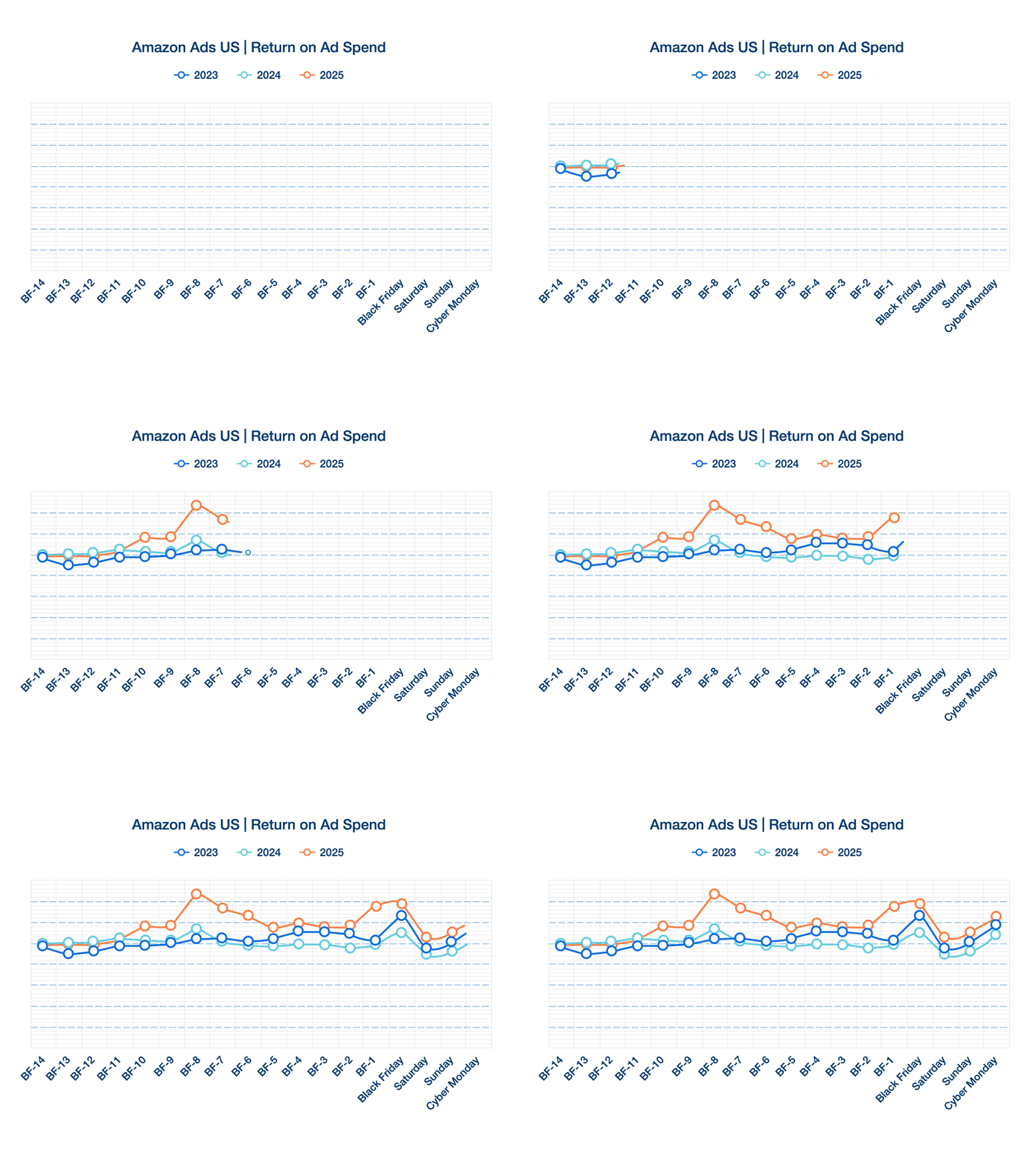
While auction pressure intensified heading into Black Friday and Cyber Monday, CPCs for both Sponsored Products and Sponsored Brands rose at a pace consistent with seasonal demand. Conversion performance remained steady or improved during the peak window, allowing ROAS to strengthen despite higher costs. These dynamics reflect elevated shopper intent and more concentrated traffic as consumers moved into the core holiday buying period.
While advertisers significantly increased investment during BFCM, sales grew even faster across both ad types, signaling strong consumer response and efficient budget deployment in the highest-intent moments of the season. Early activation produced moderate gains in CPCs, spend, and sales ahead of the event, but the most meaningful lift remained centered within the core BFCM window, where heightened visibility and demand aligned to drive the strongest returns.
Cyber 5 Amazon EU Trends
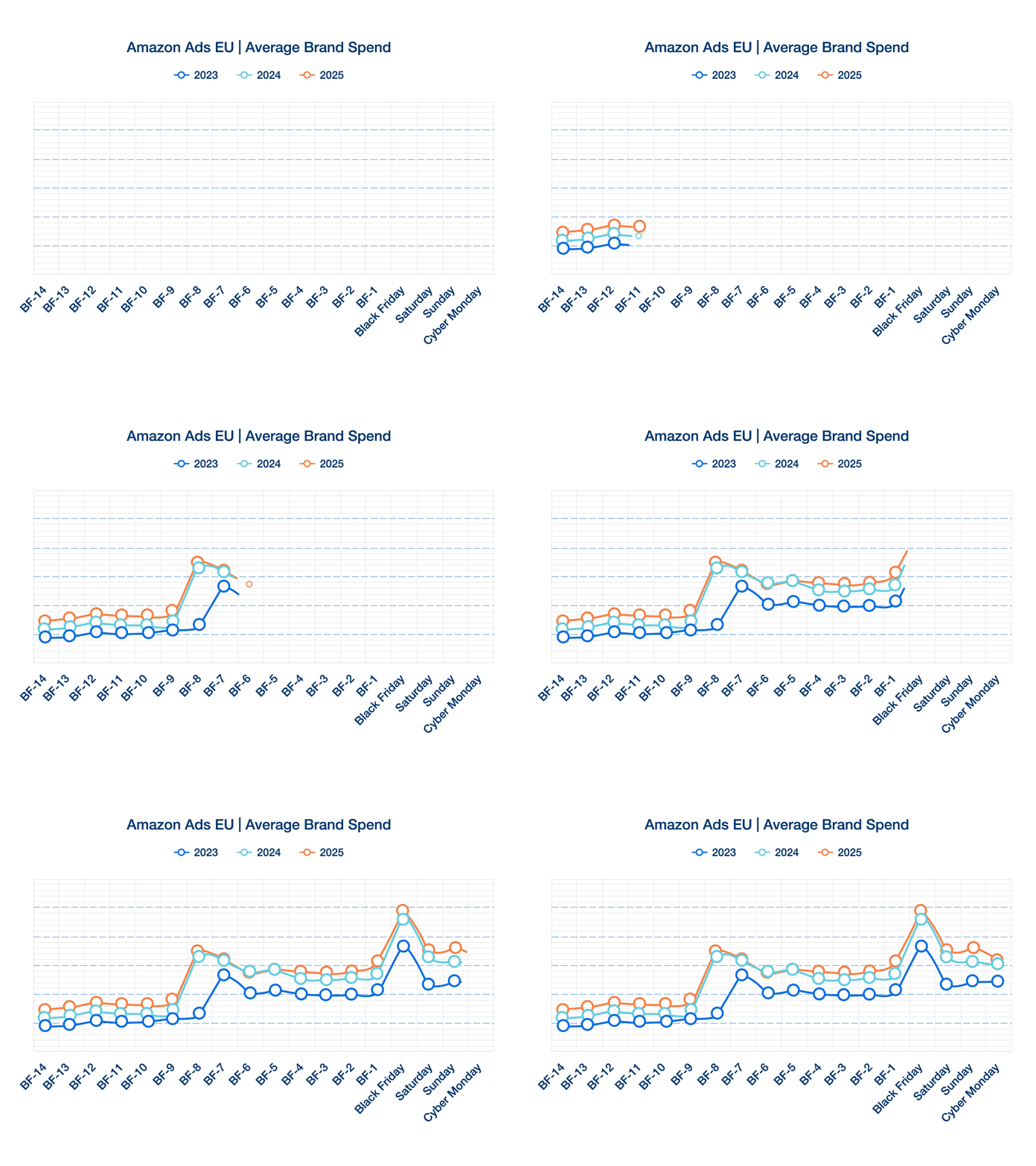
While auction pressure intensified more sharply across Amazon’s EU marketplaces during Black Friday and Cyber Monday, CPCs rose significantly for both Sponsored Products and Sponsored Brands, reflecting highly competitive bidding environments. Conversion performance softened slightly across formats, with SP CVR essentially flat and SB CVR declining as shoppers took more time to compare options before purchasing. As CPC inflation outpaced conversion stability, ROAS pulled back across both ad types, highlighting the added difficulty of maintaining efficiency during peak seasonal competition where discovery behaviors expand and paths to purchase lengthen.
While advertisers ramped spend aggressively in the EU—though more measured than the U.S.—sales growth did not keep pace, reflecting a market where higher auction costs and more exploratory browsing limited efficiency gains. Sponsored Products saw meaningful sales lift but still trailed spend velocity, while Sponsored Brands produced a more modest sales increase amid heightened top-of-funnel competition. Early BFCM activation was notably stronger in the EU, with CPC, spend, sales, and ROAS beginning to rise earlier in the lead-up to the event, signaling an earlier and more intense shift into BFCM mode relative to the U.S. market.
Cyber 5 Walmart Trends
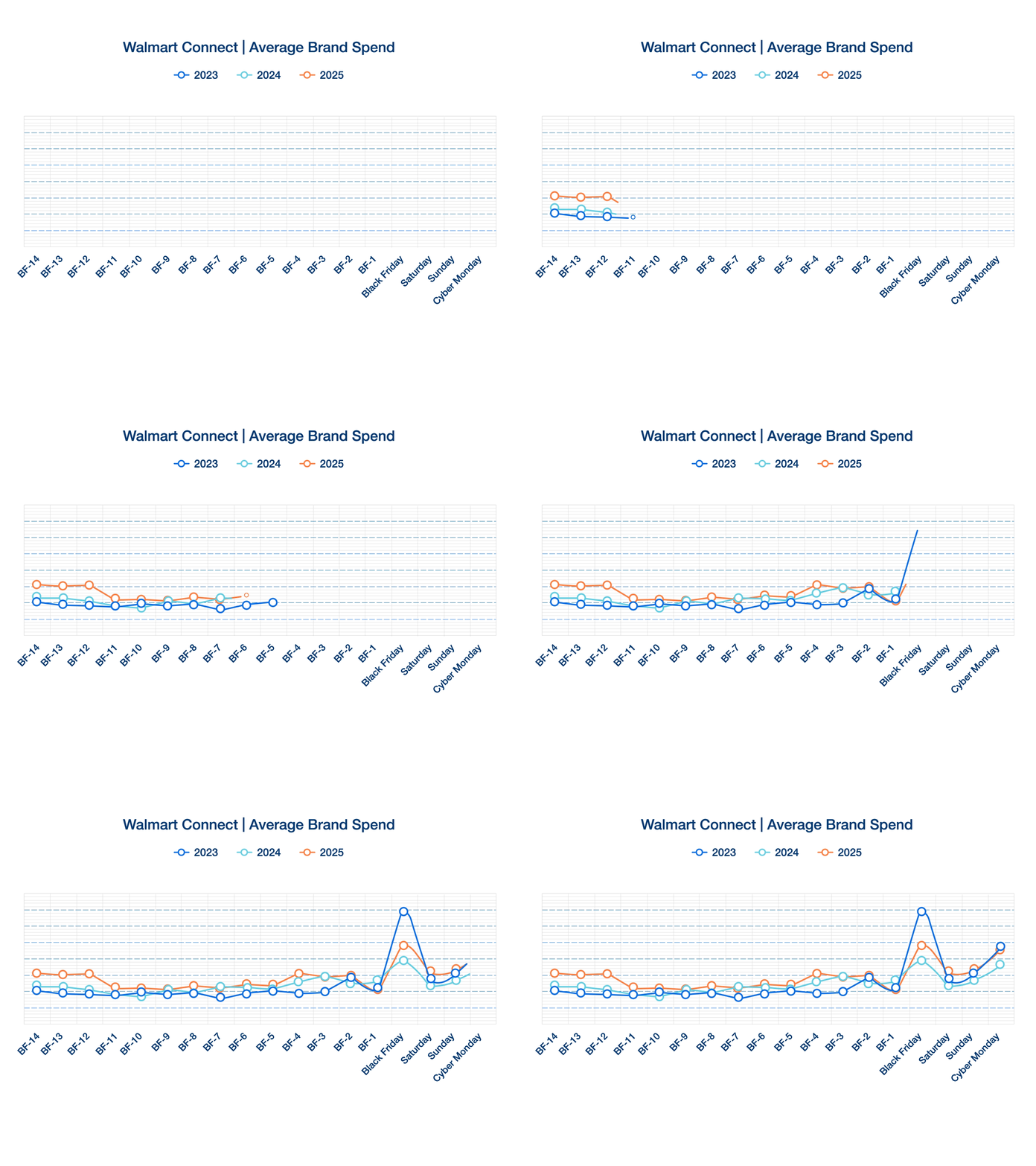
While CPCs rose meaningfully across Walmart US during Black Friday and Cyber Monday, both Sponsored Products and Sponsored Brands experienced noticeable auction tightening as advertisers increased bids into peak demand. Sponsored Products efficiency held relatively steady despite higher costs, while Sponsored Brands saw a strong ROAS lift as BFCM traffic improved click and impression quality. These shifts reflect a competitive but responsive marketplace, where elevated holiday activity drove both cost pressure and stronger engagement across formats.
While advertisers significantly increased investment heading into the peak period, sales scaled in both SP and SB, with Sponsored Brands in particular delivering outsized growth relative to spend. Sponsored Products saw sales rise nearly in line with budget expansion, indicating stable return dynamics, while Sponsored Brands generated a far stronger sales response, underscoring their effectiveness during high-intent holiday shopping. Unlike Amazon, Walmart’s BFCM peak extends beyond just Black Friday and Cyber Monday, with elevated momentum sustained across the weekend, creating a broader window for advertisers to capture demand.
Cyber 5 Target Trends
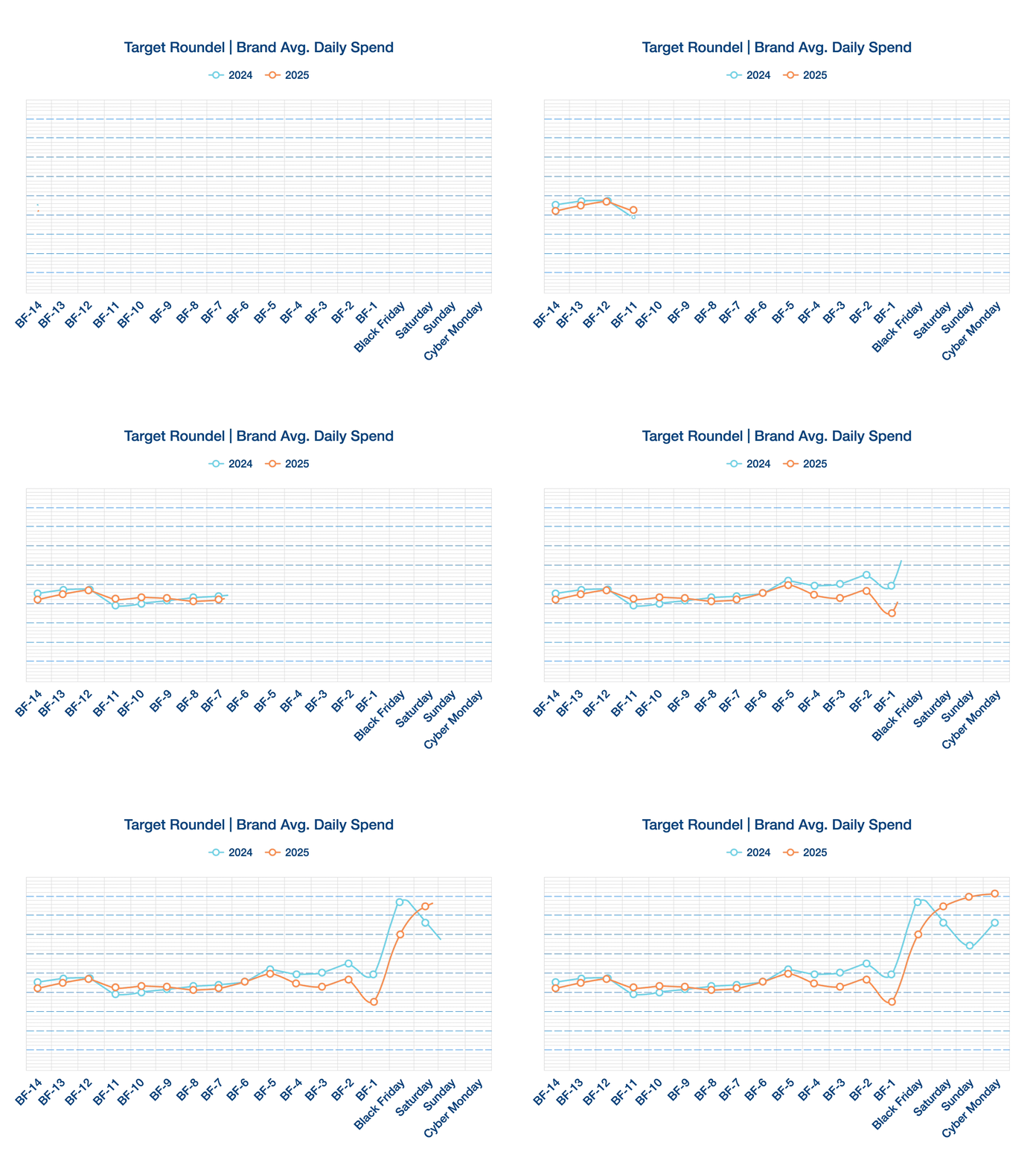
While Black Friday delivered stronger efficiency on Target US year over year, advertisers spent less overall yet saw improved returns. Spend declined 19% versus 2024, but CPCs fell 11% and ROAS rose 28%, indicating that cheaper traffic and higher shopper readiness supported better performance despite lighter budgets. Impressions were also more cost-efficient, with eCPM down 18%, reinforcing a more favorable auction environment on Black Friday 2025.
While Cyber Monday showed the opposite trend, with spend up 20% year over year and higher competition pushing CPCs and eCPMs up 17%, efficiency softened as ROAS fell 19%. The increased cost of traffic and impressions signals a more competitive landscape on Cyber Monday, where elevated demand did not translate into the same return levels as the prior year. These contrasting dynamics highlight how Target’s BFCM performance varied meaningfully across the two peak days.
Cyber 5 Amazon Category Trends
While category investment patterns varied across Amazon US, Pet Supplies led year-over-year growth in average daily spend, while Beauty & Personal Care and Electronics emerged as the top spending categories in 2025. CPCs rose most sharply in Pet Supplies and Baby Products, with the highest absolute CPCs appearing in Health & Household and Pet Supplies—signaling intensified bidding competition in high-demand segments. The highest-performing categories by ROAS were Electronics and Clothing, Shoes & Jewelry, where shoppers demonstrated strong intent and efficient conversion paths.
While conversion rates improved most meaningfully in Baby Products and Industrial & Scientific categories, the highest CVRs in 2025 came from Grocery & Gourmet Food and Health & Household, reflecting consistently strong purchase intent in essential, replenishable segments. Together, these trends highlight how advertiser investment, auction dynamics, and shopper behavior vary materially by category during BFCM—reinforcing the need for category-specific strategies, with efficiency, competitiveness, and consumer readiness shifting differently across the marketplace.