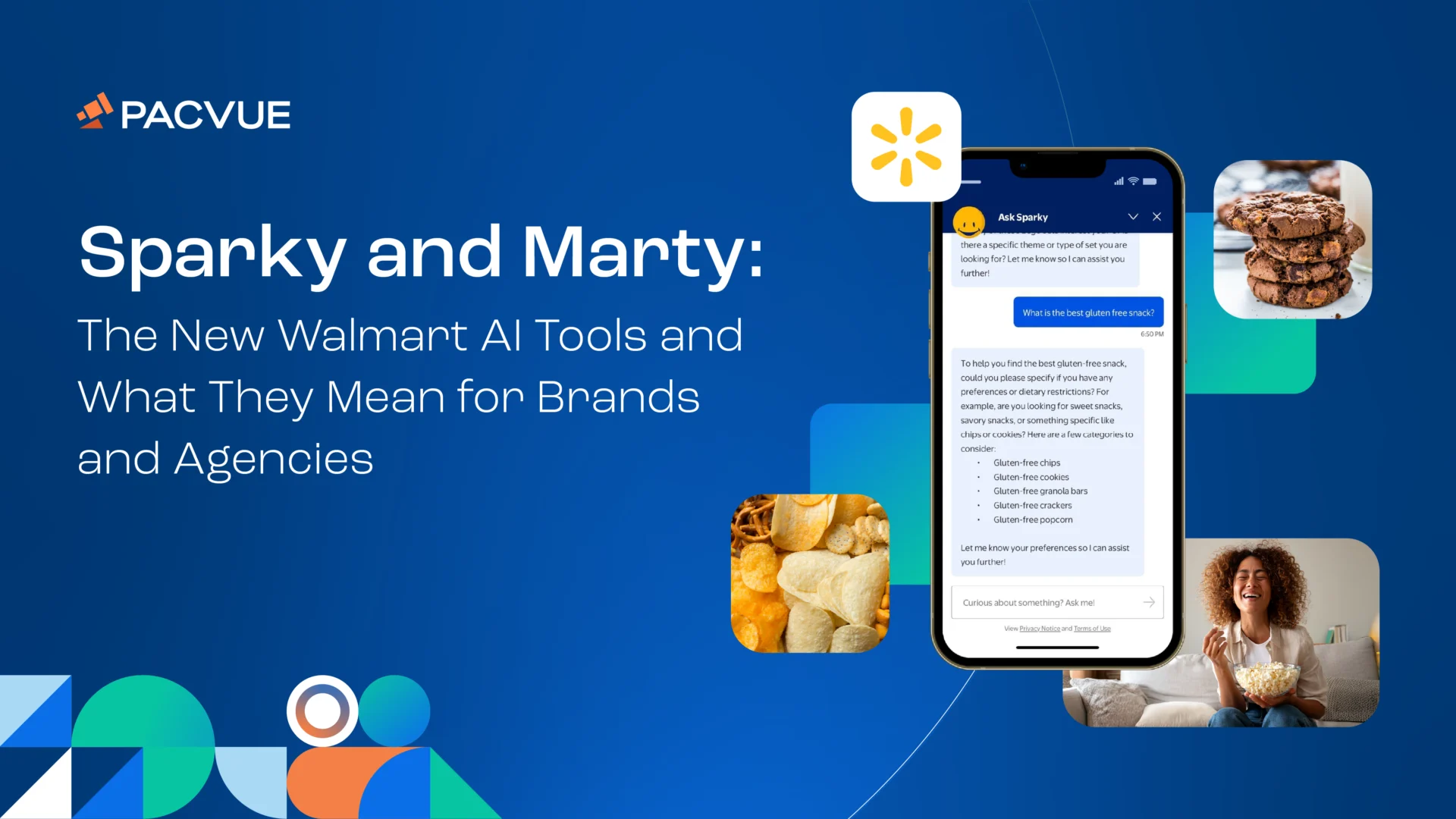
Walmart shoppers can now “Ask Sparky” to help them shop in a more efficient way. Sparky, Walmart’s new AI-powered super-agent (the smiley face icon in the app), supports the retailer’s goal to have ecommerce account for half its total sales in five years. Sparky’s purpose: grow digital sales by improving shopper experience and, in Walmart’s words, “take the guesswork out of shopping.”
Coming soon, Marty—Walmart’s seller- and advertiser-facing AI assistant—will simplify and streamline the experience for suppliers and advertisers. Marty’s purpose is to make onboarding, order management, and Walmart Connect advertising easier and more efficient. These tools are more than chatbots; they form the heart of Walmart’s new approach to retail, where success for brands and agencies will depend on how well they adapt to an AI-first commerce model.
A New Era: The Future of Walmart E-Commerce
The future of Walmart is being reshaped by AI. Walmart’s AI journey began with the development of separate AI tools for pricing, supply chain management, and media buying. Walmart is shifting towards a “super-agent” strategy—a next-generation approach that connects merchandising, marketing, logistics, and customer experience through a single AI assistant. In Walmart’s vision, a single AI agent will be able to guide merchandising, marketing, logistics and customer experience. The aim is smarter optimization, faster response to market shifts, and a better customer journey. For brands and agencies, the message is clear: success on Walmart will depend on how quickly campaigns, creatives, and operations can adapt to Walmart’s AI ecosystem.
AI is redefining what it means to win on Walmart. Here’s what you need to know.
Meet Walmart’s AI Assistants, Sparky and Marty: A Game-Changer in AI Commerce
What sets Sparky and Marty apart is that they’re not just tools; they’re agentic AI that don’t just inform, but act.
How is Walmart Using Agentic AI?
The real breakthrough with Walmart AI isn’t that Sparky and Marty exist, it’s the move from static AI tools to agentic AI. Traditional AI provides information; agentic AI can act on it. That means Sparky can move from recommending products to actually adding them to carts, and Marty can shift from surfacing analytics to automatically optimizing ad campaigns.
What Can Walmart’s AI Super-Agents do?
Sparky is Walmart’s customer-facing AI agent within the Walmart app. Right now, it helps shoppers discover products, compare items, summarize reviews and answer questions. Going further than typical tools and chatbots, Sparky is trained on retail-specific LLMs and will soon be able to respond to images, voice and video as well as text. This means shoppers could ask, “Here’s a picture of my living space, what furnishings would add a mid-century vibe?”. In the future, Sparky will also be able to reorder essentials, plan meals, and book services for Walmart shoppers. It’s easy to see how Sparky will contribute to Walmart’s ecommerce growth in a big way.
Marty, on the other hand, will support brands, sellers, and advertising agencies. It will simplify how you partner with Walmart from the onboarding stage, through managing orders, to launching Walmart advertising campaigns. Marty will provide deeper analytics, advanced marketing automation, and streamlined retail media planning. Walmart’s logic? When it’s easy for you to sell, it’s easier for consumers to buy.
Why Walmart’s AI Strategy Shift Matters for Brands and Agencies
Although Marty isn’t yet live for suppliers, it’s expected to launch in the near future. Meanwhile, Sparky is already reshaping product discovery and shopping behavior for Walmart customers.
Sparky Changes How Consumers Shop on Walmart
Use cases include:
- Occasion-Based Recommendations: “What sports teams are playing tonight?” → jersey suggestions.
- Shopping in Context: “What should I wear to the beach this weekend?” → weather-based outfit picks.
- Event Planning: “Help me plan a unicorn-themed party.” → décor, food, and gifts.
- Step-by-Step Tasks: “How do I fix this leaky faucet?” → instructions + cart-ready tools.
- Meal Planning: “What’s for dinner?” → AI meal plan + cart add-ons.
- Multimodal Queries (coming soon): “Here’s my pantry photo—what can I cook?”
For marketers, this means campaigns must anticipate shopper intent beyond keywords. For sales teams, inventory availability will directly influence Sparky’s recommendations.
And for analytics leaders, real-time reporting on how Sparky is driving discovery will be critical.
Impact of Walmart AI on Discovery, Advertising, and Brand Performance
Marty will streamline supplier workflows, making Walmart Connect advertising more automated and data-driven. By linking sales signals to ad performance, Marty will enable advertisers to automatically pivot campaigns and make smarter budget allocations.
Walmart’s Sparky vs Amazon’s Rufus
Like Amazon’s Rufus, Walmart’s Sparky sits above product search as a conversational layer, pointing shoppers to relevant Product Detail Pages. Rufus is more aligned with traditional support; informative rather than action-oriented. However, Sparky illustrates the future of Walmart; an AI that moves beyond assistant mode to active personal shopper.
Comparing the opportunities for advertisers, Amazon’s Rufus already includes an auto-opt in feature for advertising, meaning brands can promote their products within Rufus. Walmart may follow a similar path once Sparky and Marty are more established.
Actionable Strategies: How Brands and Agencies Can Win with Walmart AI
The rise of Walmart AI is more than a technology shift. It’s a strategic reset for retail media. With Sparky guiding shoppers and Marty powering supplier workflows, we need to rethink how we ensure products show up on Walmart.
#1. Rethinking Your Media and Retail Strategy for Walmart AI
AI is changing how Walmart connects shoppers with products. Marketers must now design campaigns that anticipate shopper prompts and intent, ensuring messaging resonates with the context Sparky provides throughout the shopper journey.
- Consider how shoppers will prompt Sparky, and build your campaign creatives around shopper intent, not just keywords. Shoppers will help Sparky refine the search by providing context, e.g., “What is the best toy for a five-year-old kid who likes outdoor play?” (You can find more tips for intent-based campaigns in our guide to optimizing for AI.)
#2. Follow What the Data Tells You
Pacvue’s insights show what’s working and what’s not in AI-led environments like Walmart. Understanding the gaps in your strategy helps you improve performance:
- Optimize your product data because AI surfaces products based on titles, images, and attributes, not just ads.
- A/B test your creatives because even small changes can shift how Sparky ranks and recommends products.
#3. Quick Wins
- Enhance your PDPs. Sparky pulls from your product pages to answer shopper questions.
- Be early to adopt Marty and gain a first-mover advantage.
- Sync campaigns with moments Sparky is likely to influence like gifting, school holidays or trending queries.
Walmart’s AI future is here. Are you ready?
Sparky and Marty are changing how people shop, search, and sell. The brands that adapt fast will win. With the right data, creatives, and tools, you can leverage agentic AI from Walmart to get better results from your retail and media strategies.
Learn how Pacvue’s Walmart solutions can help you stay ahead.