
Rethink Your 2027 Strategy
The CMO’s Guide to the Future of Commerce Media
Most 2027 media plans are being built on a picture of the market that no longer exists. Pacvue and retail media analyst Andrew Lipsman co-authored this guide to change that. See where ad spend has actually moved, how much the Silo Tax is costing you, and the three moves to make now before you lock next year’s budget.
The CMO’s Guide to the Future of Commerce Media
Your 2027 plan is built on yesterday’s model. See where the Commerce Grid is replacing the traditional funnel, how to measure what actually matters, and the three moves to make before you lock next year’s budget.
-
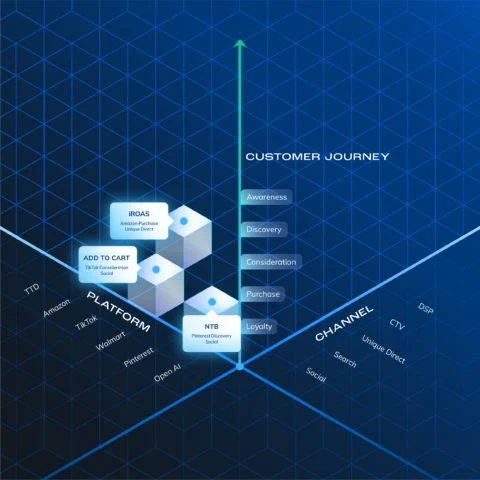
How the Commerce Grid replaces the traditional funnel in a converged media ecosystem
-
Why standardized measurement (iROAS, not ROAS) uncovers hidden profit leakage across channels
-
The three operational moves that eliminate the Silo Tax and unlock category growth
The Funnel is Gone. Now What?
A consumer discovers a product on TikTok, researches through AI, gets retargeted on streaming, and buys from a retailer, sometimes in a single session. The traditional marketing funnel can’t account for any of that. This guide is your new roadmap.
Inside, you’ll discover:
- Why the traditional funnel hides spend that most MMMs miss
- How upper- and lower-funnel performance stack up across platforms like Amazon and TikTok
- The Commerce Grid framework for eliminating the Silo Tax, the hidden cost of running media, retail, and ops as separate systems
- Why ROAS alone can’t tell you which channels are working
- The three moves every CMO needs to make before 2027
The Guide at a Glance
Your 2027 Plan Starts Here
Map Every Channel to One Set of Outcomes
Tie your channels, ad types, and customer journey stages to one shared set of verifiable outcomes. When a new platform emerges, you add it to the grid and start measuring what it drives, instead of arguing about which funnel stage it belongs to.

Put Every Platform on the Same Scorecard
Standardize your definitions and attribution windows so upper-funnel metrics sit alongside lower-funnel ones. With advertisers managing more retail media networks than ever, one scorecard is the only way to see which ones are earning their budget.

Connect Your Systems, Metrics, and Teams
Your action plan, from this guide: (1) consolidate the platforms making separate decisions channel by channel, (2) standardize how every channel gets measured, and (3) restructure teams around a single outcome. Skip one, and the gaps stay open.

Find the Growth Your Category Is Missing
Audit your category’s channel mix against what the grid shows. Every category has an allocation that made sense a decade ago and never got revisited. Find where growth has migrated, and shift budget there first.

The 2027 Media Planning Gap
Sourced from Deloitte, McKinsey, and IAB research
The Cost of Staying Fragmented: The Silo Tax
The Silo Tax is the hidden cost of running media in silos. It’s the revenue you lose to stockouts, the media spend wasted on inventory you can’t sell and the hours your team wastes moving data between systems. Teams optimize to what they can measure, not what drives growth.
The question is not whether you have a Silo Tax. It’s how much it is costing you.

15-25% Wasted Spend
From fragmented decision-making and incomplete attribution across channels and platforms.

Invisible Margin Erosion
ROAS looks strong while profit hides in siloed functions and disconnected business units.

Delayed Decision Cycle
Quarterly planning cycles can’t keep pace with daily market changes and competitor movements.

Build a 2027 plan around how commerce media actually works, not how it used to.
The CMO’s Guide to the Future of Commerce Media
Your 2027 plan is built on yesterday’s model. See where the Commerce Grid is replacing the traditional funnel, how to measure what actually matters, and the three moves to make before you lock next year’s budget.
-
How the Commerce Grid replaces the traditional funnel in a converged media ecosystem
-
Why standardized measurement (iROAS, not ROAS) uncovers hidden profit leakage across channels
-
The three operational moves that eliminate the Silo Tax and unlock category growth
Delivering outcomes at scale for +70,000 brands and agencies
All case studies






L’Oréal UK and Publicis Media UK connected retail readiness signals directly to media execution through Pacvue’s Commerce Media OS — ensuring ad spend was dynamically concentrated on in-stock, Buy Box-eligible listings for stronger performance.

To accelerate new-to-brand growth across Japan’s top retail media platforms, Itsumo deployed Pacvue as its AI-powered commerce OS — integrating Sponsored Ads, Amazon DSP, and AMC to remove SQL bottlenecks and activate audiences at speed.
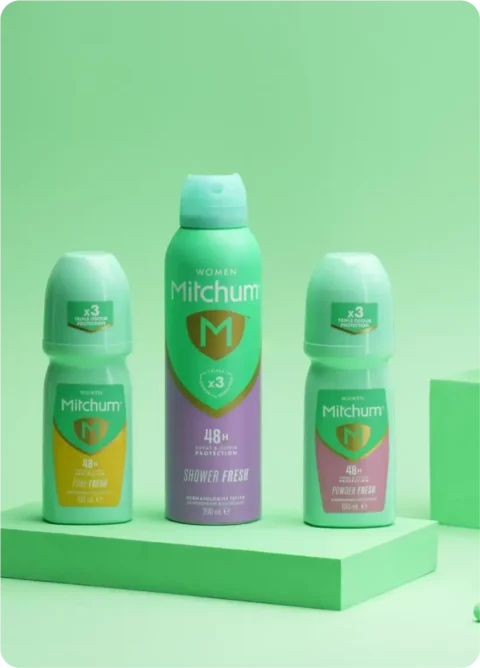
With Pacvue’s Commerce Operating System, Revlon’s Mitchum brand and Horizon Media connected media investment with real-time commerce signals to shift from reactive adjustments to proactive, full-funnel Amazon growth.

Perdue expanded beyond search into Walmart Connect’s Onsite Display ecosystem with Pacvue, using AI-driven budget management, Share of Voice analytics, and full-funnel targeting to unlock new customer growth at scale.

By syncing Pacvue’s Commerce and Advertising solutions, Duracell implemented profitability-aware automation — including Net PPM%, Buy Box, and inventory rules — to protect margins and drive measurable revenue growth on Amazon.

WPP Media used Pacvue’s Automated Rules to optimize Amazon Ads for Mars in Saudi Arabia — dynamically adjusting bids against target ROAS and eliminating wasted spend to drive outsized sales growth and category penetration.
Experience the future of connected commerce.
Book a demoBuilt for performance.
Powered by partnerships.