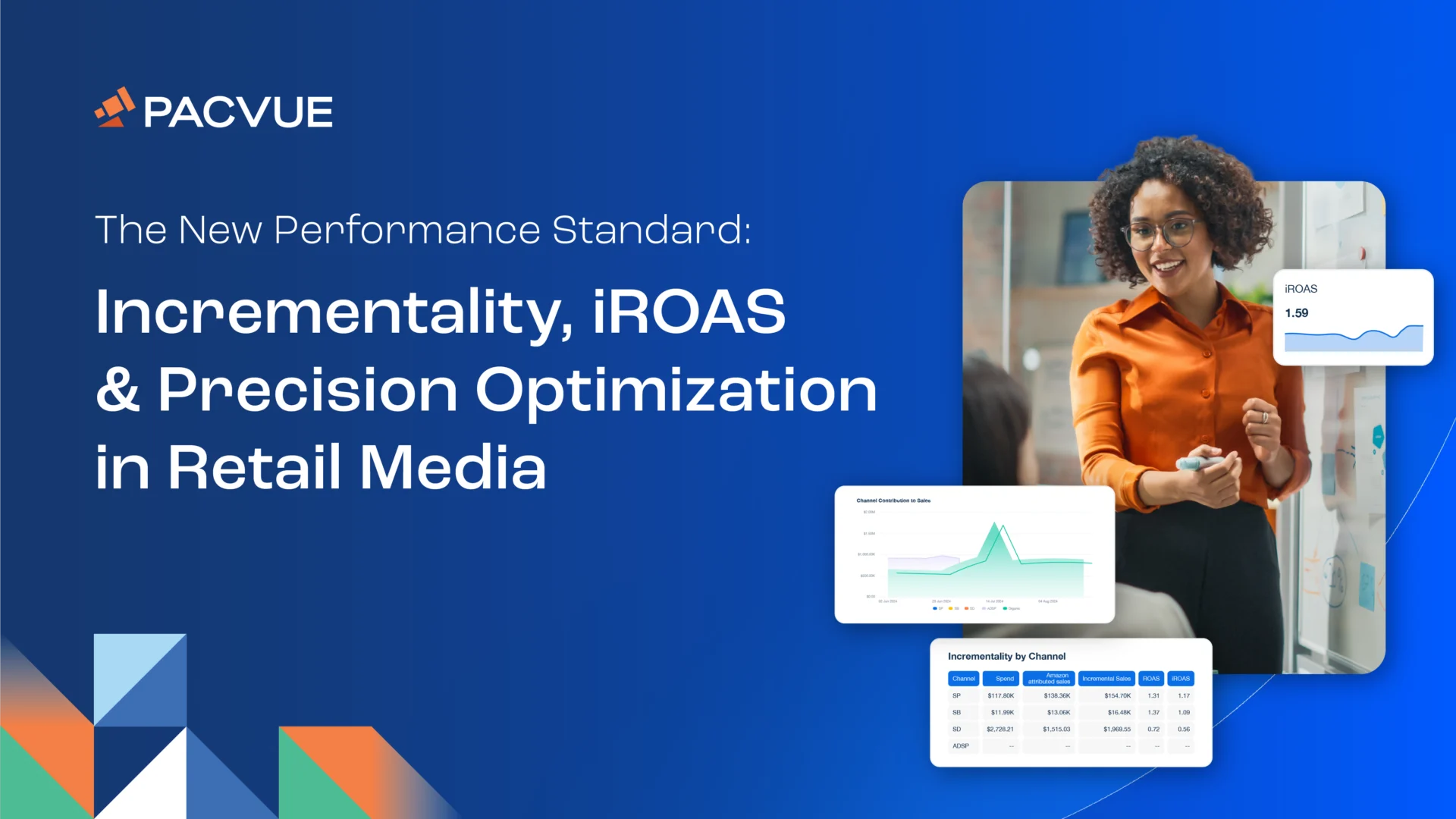
Incrementality is becoming the key performance standard in retail media. Traditional metrics only show correlation, but incrementality quantifies the sales that advertising actually causes. As budgets tighten, teams need proof of causal impact and a clear way to separate real lift from recycled demand. Incrementality and iROAS provide a clearer view of true contribution by helping teams separate real lift from shoppers who would have purchased anyway.
What is incrementality?
Incrementality measures the additional sales generated by advertising compared to what would have happened without ads. It answers the core question: did the campaign create new demand. This makes incrementality essential for understanding retail media performance and for prioritizing tactics that drive growth.
Why Incrementality Matters Now
Retail media data continues to expand, but many teams still struggle to identify which results were caused by advertising. ROAS often reflects correlation rather than causality and can overstate performance by capturing shoppers who were already intent on buying. Incrementality clarifies where to invest more and where to pull back without hurting outcomes.
This guide shows how to:
- Shift from reporting outcomes to proving contribution
- Use incrementality and iROAS to scale only what drives new revenue
- Improve efficiency through precision optimization and timing strategies
- Apply retail signals such as inventory, pricing and Buy Box status to increase incremental lift
- Build a modern optimization framework aligned with 2026 measurement standards
Why ROAS Is No Longer Enough to Prove Retail Media Impact
ROAS reports how efficiently a campaign generated revenue compared to what it spent. It is a useful metric for understanding efficiency, but it does not show causality. ROAS cannot explain whether advertising convinced a shopper to buy or whether the shopper would have converted without seeing an ad. The key question ROAS cannot answer is: what sales would look like if ads were not running?
A high ROAS can be misleading. High ROAS does not always signal real growth. Branded search often captures existing intent, inflating results without adding incremental demand.
Retail media budgets are under closer scrutiny today. Marketers need metrics that prove true contribution instead of recycled demand. This is why ROAS is no longer enough to measure the real impact of retail media.
What Incrementality Really Measures and Why It Matters in 2026
Incrementality measures the difference between baseline revenue, what would have occurred without advertising, and incremental revenue driven by ad exposure. It provides a clear view of causal lift and eliminates the ambiguity that traditional metrics cannot resolve.
Recent advances have made incrementality more accurate and accessible:
- Retailers are supplying more granular event-level data
- Ad platforms are introducing more reliable iROAS models
- Tools such as Amazon Marketing Cloud connect exposure paths to conversion outcomes
With clearer measurement, teams can make smarter decisions about budget allocation, retailer prioritization, and activation strategies that align with inventory, Buy Box ownership, and pricing.
Incrementality helps protect margin and strengthens budget justification in a competitive environment.
iROAS: The Metric Behind True Marketing Contribution
iROAS is calculated by dividing incremental revenue by campaign cost. Unlike ROAS, iROAS excludes baseline demand and isolates the revenue directly influenced by ads. It reveals whether investment is driving meaningful, net-new growth.
Campaign Incrementality: iROAS Use Cases in Retail Media
Campaigns may show high ROAS by retargeting loyal customers or capturing branded search, yet deliver little incremental value. iROAS clarifies when spend is creating lift and informs smarter funnel planning.
iROAS helps marketers:
- Increase spend in campaigns that reliably create lift
- Reduce or refine activity that looks efficient but drives limited contribution
- Compare channels such as CTV and Search to understand their unique roles in driving incremental growth
iROAS Made Easy
Historically, measuring incrementality required resource-heavy approaches such as control tests and marketing mix modeling. These approaches were slow, costly, and difficult to scale for day-to-day decisions.
Today, retail media networks and marketing automation platforms offer real-time data and built-in incrementality modeling. Automated iROAS modeling brings together causal lift, profitability, and retail signals such as inventory and Buy Box status, allowing teams to optimize based on true contribution rather than vanity metrics.
Once teams can measure causal lift with confidence, the next step is activating those insights through precision optimization.
Connecting Incrementality to Execution: How Precision Optimization Maximizes True Lift
Knowing which sales are incremental is only the first step. The real value comes from acting on this insight. Incrementality reveals the tactics, time periods, and product conditions that genuinely drive lift. When these insights are paired with real-time shopper behavior and retail-readiness signals, advertisers can activate media only when conversions are most likely.
Incrementality becomes actionable when teams optimize the levers that most directly influence lift: when shoppers buy, whether products can convert, and whether the sale is profitable.
Dayparting Ads: Allocating Spend to High-Intent Moments
Dayparting adjusts ad spend based on the hours when shoppers are most likely to convert, increasing the odds that an ad exposure causes the sale. By aligning investment with high-intent periods, teams can stretch budget further and enhance incremental efficiency.
Real-world Dayparting Optimization Strategies
Hour-level metrics often show distinct conversion windows. Early morning traffic may generate clicks but low conversions, while lunchtime or evening hours may show purchase intent. Applying dayparting allows teams to shift budget into periods with the highest expected lift. This stretches the same budget further and improves incremental efficiency.
Amazon Dayparting Case Study
A leading beverage manufacturer used Dynamic Dayparting to adjust Amazon bids based on hourly conversion patterns. This reduced low-intent spend and increased revenue by 31% across multiple product lines.
Retail Signals: The Operational Inputs Behind Incremental Performance
Incrementality depends not only on media but also on whether products are positioned to convert. Aligning spend with Retail signals such as Buy Box ownership, stock availability, and pricing competitiveness, prevents wasted spend and strengthens iROAS.
Profitability-Aware Rules: Is Incrementality Always the Goal?
Incrementality is valuable, but not every incremental sale contributes to commercial outcomes. A campaign may drive lift, but if conversions come from low-margin products or items with limited inventory, net impact can be negative.
Profitability metrics like Net PPM percent or Weeks of Cover help ensure spend goes toward items that can convert profitably. This approach aligns Marketing with Sales, Finance, and Supply Chain so that performance is measured on sustainable growth, not volume alone.
Building Your Incrementality-Driven Optimization Strategy for 2026
To build a successful incrementality-led model, teams must combine causal measurement, intent signals, retail readiness, and automation.
Step 0: Audit how much of today’s ROAS is truly incremental
Use incrementality modeling to establish a reliable performance baseline. By distinguishing between net-new revenue and spend that only capture existing demand, teams gain the clarity needed to make stronger budgeting decisions and set more accurate goals. Why it matters: It separates meaningful performance signals from noise.
Step 1: Measure real lift using incrementality models
Go beyond attribution and quantify causal lift consistently. Identify which campaigns, audiences, and placements generate net-new revenue and which can be reduced without harming outcomes.
Why it matters: It enables smarter resource allocation.
Step 2: Identify high-intent time periods with dayparting and traffic patterns
Combine hourly traffic, conversion, and cost signals to pinpoint when shoppers are most likely to buy. Shift spend into these high-intent windows.
Why it matters: It increases incremental impact without increasing spend.
Step 3: Align media to retail readiness
Activate media only when your product can convert. Connect campaigns to live signals such as inventory cover, Buy Box ownership, pricing, or content status.
Why it matters: It preserves margin and prevents wasted spend.
Step 4: Automate rules so precision becomes the default
Automation ensures consistency at scale and frees teams to focus on strategy rather than manual upkeep.
Why it matters: It scales decisioning across thousands of SKUs.
Incrementality + Precision Execution in Practice
These examples show how combining incrementality insights with retail signals and timing strategies drives measurable lift.
Home Appliance Brand Boosts Revenue with Smarter Retail Signal Integration
A home appliance brand connected advertising investment to real-time retail signals including Buy Box ownership and Weeks of Cover. This prevented wasted spend and focused budgets on items with strong conversion potential. The brand delivered 34% revenue growth on flat budgets with a higher ASP.
Panasonic Boosts iROAS and Sales with Real-Time Shelf Signals
Panasonic used digital shelf intelligence to respond to competitor shifts and redirect spend toward moments of highest incremental potential. This approach nearly doubled total sales and delivered an 83% lift in new-to-brand revenue.
What Advertisers Need to Watch in 2026
As retail media matures, incremental growth will depend on clarity, connected data, and disciplined optimization. Several risks can limit both incremental performance and profitability.
- Reporting in silos leads to double-counted performance: Teams that measure channels and retailers separately often inflate ROI without realizing it.
- ROAS alone inflates branded demand capture: Branded search and branded retail media look efficient, but they rarely create new demand.
- Inventory gaps reduce incremental performance: Ads continue to spend when products are out of stock, overpriced, or losing the Buy Box.
- Margin pressure requires more disciplined investment: Growth is no longer enough. Media must support profitability, not just revenue.
- Optimization strategies are shifting toward outcomes that drive lift: Teams are moving from optimizing everything to prioritizing tactics that create net-new results.
- AI-driven bidding accelerates optimization at scale. Incrementality ensures automation is focused on outcomes that drive real growth, not just efficiency.
Turning Incrementality Insights into Scalable Growth
Incrementality is no longer a diagnostic metric but a planning tool that guides where and when to invest. When incrementality, dayparting, retail signals, and profitability rules work together, teams can reduce waste, protect margin, and grow with confidence.
Connect with a Pacvue expert to learn how to measure incrementality and improve media efficiency.